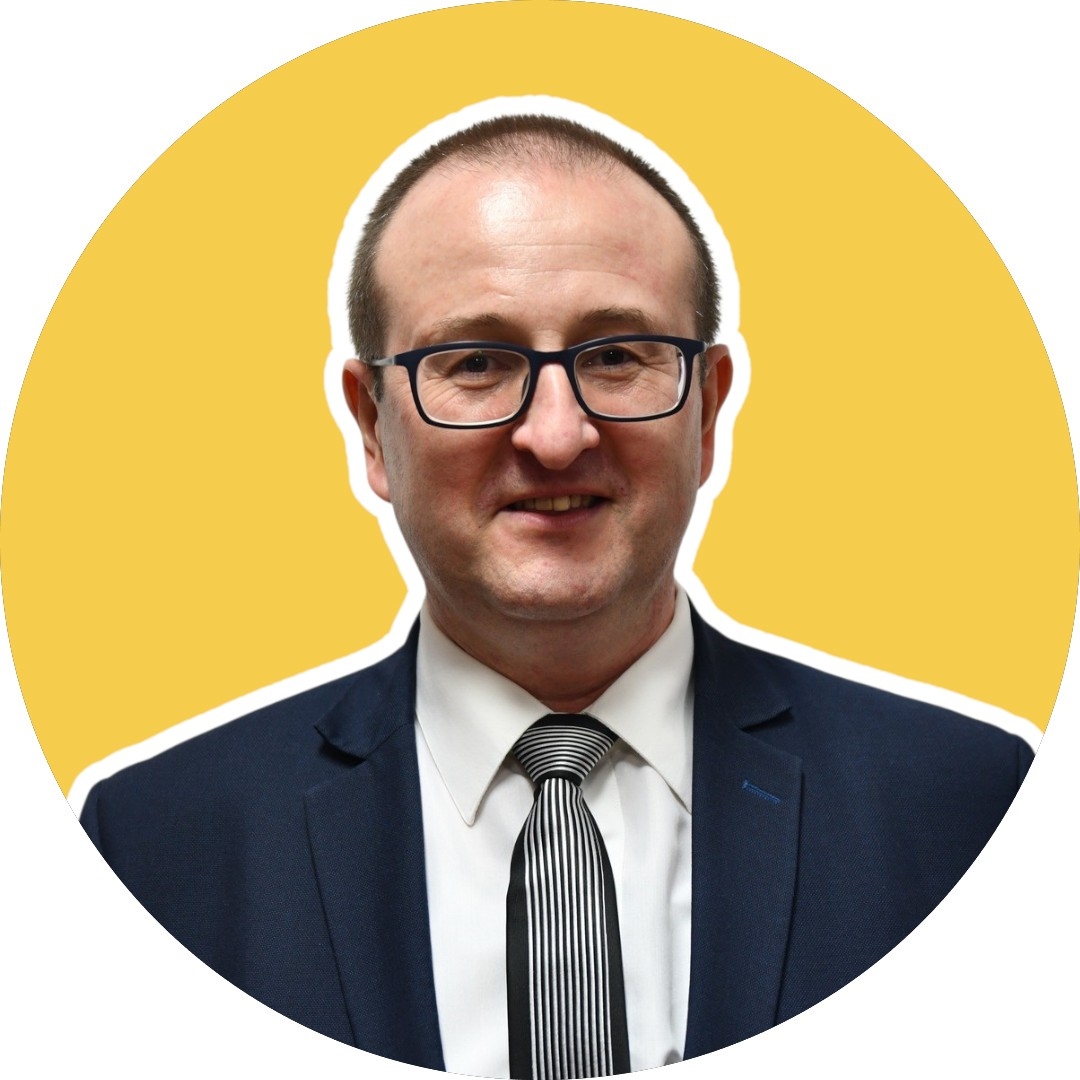
Krzysztof Jóźwiakowski


The Poznań University of Life Sciences (PULS) is a leading Polish university in the field of life and agricultural-forestry sciences, as well as related economic and engineering-technical disciplines. Our university is called a “green university” because it is close to nature, ecology, and environmental management. The UPP structure includes 6 faculties, with 750 scientific staff conducting research in 10 leading scientific disciplines, mostly rated A+ and A. The PULS educates over 7,000 students and 120 PhD students. Educational programs are tailored to the challenges of the modern world, and its research sets new directions in agriculture, ecology, biotechnology, and life sciences. PULS graduates are globally respected specialists – leaders who shape the future in the natural, economic, and technological sectors. Thanks to its extensive research infrastructure and modern laboratories, the university conducts innovative, world-class research. University researchers actively participate in international research projects, collaborating with leading institutions and companies worldwide. In a recent ranking, 29 PULS employees were among the top 2% of the world’s most cited scientists. PULS manages over 14,500 hectares of land across 10 agricultural and forestry experimental plants and farms. This makes PULS a multidisciplinary source of innovation, expert knowledge, and solutions with high implementation potential. It is a key scientific partner for businesses in agriculture, forestry, the agri-food industry, and sectors related to quality of life and ecology, contributing to sustainable social development, respect for the natural environment, and the promotion of healthy eating. One of PULS’s latest scientific and educational initiatives, with a significant impact on the socio-economic environment, is the creation of the Green AI HUB – the Wielkopolska Center for Sustainable Artificial Intelligence.
The Łukasiewicz Research Network – Institute of Non-Ferrous Metals is a scientific institution conducting innovative research aligned with global trends. We focus on the development of new technologies, optimization of industrial processes, and modernization of production lines. Our areas of interest include recycling and environmentally friendly solutions.
We conduct research across the entire development cycle: from laboratory studies to pilot-scale and prototype-scale investigations covering all non-ferrous metals. We are equipped with state-of-the-art instrumentation, accredited laboratories, and fully equipped industrial halls.
The Institute’s headquarters is located in Gliwice, while we also have branches in Skawina, Legnica, and Poznań. Our workforce comprises nearly 500 employees.
Industry Contact Point Sustainable Economy – provides support to entities wishing to apply for funding from Horizon Europe, through the organization of matchmaking and networking events as well as industry consultations. The activities of the Industry Contact Point are carried out free of charge thanks to funding from the Ministry of Science and Higher Education.
Łukasiewicz Research Network – Poznań Institute of Technology is a multidisciplinary R&D organisation operating on an international scale. The Institute was established on 1 January 2022, as a merger of five Poznań-based institutes with an established market position, vast scientific achievements and many years of experience in developing innovative solutions, modern technologies, and specialist research services. At present, Łukasiewicz – PIT conducts a wide range of R&D activities in its four research centres: the Centre for Sustainable Economy, the Centre for Modern Mobility, the Centre for Laboratory Testing and the Centre for Digital Transformation. The merger created new development possibilities for the former institutes and broadened their market offering. It also resulted in the establishment of new interdisciplinary research directions, which, among other things, contributes to obtaining international research grants and attracting foreign business partners to cooperate on highly innovative projects.
The title of conference “Circular Economy Technologies, Biotechnologies and Agrotechnologies” covers a broad range of topics with a significant impact on manufacturing processes in the economy and society, from agriculture and biotechnology-based raw material processing to waste management to minimize waste and maximize resource utilization. The conference will present innovative technologies across all thematic areas, drawing on examples from ongoing research and development projects and their implementation in enterprises.
Chairmans of session: Tomasz Smal, Grzegorz Lota, Łukasiewicz Research Network – Institute of Non-Ferrous Metals
9.10 – 9.30 Implementing nature-based solutions for circular wastewater management: examples and case studies – Keynote speech – Alexandros Stefanakis, Technical University of Crete, Chania, Greece
9.30 – 9.50 Bridging Electrochemical CO2 Capture and Conversion: From Molecular Design to Integrated Systems – Keynote speech – Maryam Abdinejad, Technical University of Denmark
9.50 – 10.05 TBD (topic in progress related to the circular economy)– Presentation – Andrzej Białowiec, Łukasiewicz Research Network – PORT
Polish Center for Technology Development
10.05 – 10.20 Sustainable Industrial Water Management: Treatment, Recovery, and Circular Economy Principles and Selected Case Studies – Presentation – Krzysztof Rajczykowski, Łukasiewicz Research Network – Institute of Non-Ferrous Metals
10.20 – 10.30 Results of study a demonstrator of a hybrid constructed wetland system used for final treatment of dairy wastewater – Research statement – Krzysztof Jóźwiakowski, University of Life Sciences in Lublin
10.30 – 10.40 Reclaimed Water for Managed Aquifer Recharge: Opportunities and Challenges – Research statement – Hanna Jaroszek, Łukasiewicz Research Network – Institute of Non-Ferrous Metals
Coffee break
Introduction – Prof. UPP dr hab. Wojciech Białas, Poznań University of Life Sciences (chairman)
Keynote speaker – Salim Essakali, MSC, MBA, Vice President, Head of OEM Business (QIAGEN GmbH)
Panel discussion:
Moderator: Prof. UPP Dr hab. Wojciech Juzwa, Poznań University of Life Sciences
Panelists:
Lunch
Introduction – Prof. UPP dr hab. Krzysztof Koszela, Poznań University of Life Sciences (chairman)
Topics of the speeches:
Smart Agrotechnologies for Europe’s Technological Sovereignty and Food Security
Digital Agrotechnologies: Data, AI and Robotics for Europe’s Food Security
Advanced Agrotechnologies for Europe’s Resilient and Autonomous Agriculture
Presentation/movie – dr Marcin Płóciennik (Poznań Supercomputing and Networking Center), dr Tomasz Wojciechowski (Poznań University of Life Sciences) – Smart Agrotechnologies for Europe
Panel discussion:
Moderator: Dr Piotr Łuczak – Agrokonsument
Topics of panel:
Panelists:
Presentation: polski StartUp Nirby
Movie: Digital Agriculture Initiative – a new chapter in agricultural innovation
Summary – Prof. UPP dr hab. Krzysztof Koszela, Poznań University of Life Sciences
At the stand: Students’ Scientific Club of Agricultural Engineering, Uniwersytet Przyrodniczy w Poznaniu
Prorektor ds. nauki Uniwersytet Przyrodniczy w Poznaniu +48 61 848 70 05 piotr.golinski1@up.poznan.pl

Dyrektor ds. Badawczych i Komercjalizacji Sieć Badawcza Łukasiewicz – Instytut Metali Nieżelaznych tomasz.smal@imn.lukasiewicz.gov.pl +48 32 238 02 12 +48 509 221 303