
prof. dr hab. Krzysztof Jassem

mgr Justyna Gruszecka




Adam Mickiewicz University, Poznań is a renowned public university with research university status, recognized as one of the most important academic centers in Poland. The strength of AMU lies in the combination of over a century of tradition with dynamic development in the fields of science, technology, and international cooperation. The university employs nearly 3,000 academic staff and educates approximately 30,000 students, offering a wide range of fields of study (over 200)—from computer science, physics, and chemistry to social sciences and law. AMU possesses modern research infrastructure, advanced equipment, and an extensive teaching base located across three campuses, which facilitates the implementation of interdisciplinary projects and the introduction of innovative solutions. The foundation of the university’s activities is conducting high-level research and providing comprehensive education. These goals are achieved, among other things, through membership in the EPICUR European university alliance.
The university actively strives to develop partnership relations with business, public institutions, and international organizations, supporting the transfer of knowledge to society. The University aspires to be an attractive partner for IT companies, startups, and entities seeking research and development facilities. Its structure includes a unit—the University Centre for Innovation and Technology Transfer—which handles these matters. The interdisciplinarity of research teams and access to highly qualified specialists enable the implementation of projects with high implementation potential.
UAM also emphasizes social responsibility, implementing activities that support sustainable development, equal opportunities, active engagement in community life, and the development of future competencies. As a result, it not only meets current market needs, but also makes it a stable, reliable, and long-term partner in the implementation of innovative, research and development, and social projects.

SWPS University excels in exploring the human mind, creativity, and social relations. We believe that through applying this expertise to address practical challenges of today and tomorrow we can learn to thrive in the world of new technologies and dynamic social change.
We are a leading higher education institution in Poland, excelling in Psychology, Law, Language and Literary Studies, Political Science and Administration, Cultural and Religious Studies, Sociology, Media and Communication Studies, Management, as well as Art, Design and Art Conservation.
With 30 research centers and over 150 research projects annually, we are one of the most active research universities in Poland. With over 20% of our publications in top world journals and over 2,400 papers in Scopus, SWPS University is a unique research-focused private University in CEE.
Panel Discussion: Social Readiness for Technology Adoption – Challenges, Opportunities, and Hopes (Adam Mickiewicz University and SWPS University)
Why are technological innovations alone insufficient to solve global problems, and how can social sciences help in breaking down user barriers? How should grant priorities and funding systems change to effectively support the development of multidisciplinary teams and research on social readiness for technology implementation?
We invite you to a debate on understanding needs rather than just functions, and on the financing of innovation. The discussion will feature designers, investors, and researchers specializing in the social impact of technology.
Moderators: Prof. Michał Banaszak (UAM) and Prof. Aleksandra Cisłak-Wójcik (USWPS)
Sylwia Czubkowska: Bóg techy. Jak wielkie firmy technologiczne przejmują władzę nad Polską i światem
David Sypniewski: A designer operating at the intersection of technology, social responsibility, and art. He focuses on creative coding and social robotics, and leads the Open Artificial Intelligence Laboratory.
Dr. Agnieszka Młodzińska-Granek: A researcher with experience in evaluating and mentoring tech startups and social innovations. She researches methodologies for measuring the social impact of technological innovations.
Przerwa – film promocyjny UAM
The Social Dimension of Technological Transformation (Adam Mickiewicz University in Poznań)
What happens to human beings, culture, and society when artificial intelligence ceases to be merely a tool and becomes the environment of our everyday lives? How is Polish academia positioning itself in the race against technological giants—and can it compete successfully at all? What does anthropology have to say about the lonely, overstimulated inhabitants of Google Earth? Why does a language model, when asked about God, respond with “universal atheism”? And what happens in our brains when we encounter fake news?
The Adam Mickiewicz University session brings together four research perspectives—computer science, anthropology, mathematics and AI, and cognitive neuroscience—to demonstrate that the social consequences of the technological revolution can be examined from multiple dimensions. It offers a diagnosis of the condition in which we find ourselves as users, researchers, and citizens, while also inviting a broader conversation about where this transformation is leading us.
Prowadzenie: prof. Natalia Walter, prof. Michał Klichowski
11:00 – 11:20 – prof. Krzysztof Jassem (Dyrektor CSI): Chasing AI Giants: On the Collaboration Between Science and Business in Poland
11:20 – 11:40 – prof. Waldemar Kuligowski (Zakład Antropologii Kulturowej WAiK UAM) – Elderly, lonely, pet-companioned, overstimulated inhabitants of Google Earth. The future we see today
11:40 – 12:00 – dr Bartosz Naskręcki (Wydział Matematyki i Informatyki) – artykuł z GW (ciekawy tytuł): Kiedy zapytasz model językowy AI o Boga, wynikiem będzie “uniwersalny ateizm”
12:00 – 12:20 – mgr Justyna Gruszecka (Faculty of English and Cognitive Neuroscience Center): Neural Mechanisms of Fake News Processing
Przerwa – film promocyjny UAM i film promocyjny SWPS
SSH & Technology for the Future – Case Studies (SWPS University)
Does the success of innovation depend solely on engineering advancement? During this case studies session, we will prove that the key to creating the technologies of the future lies in a deep understanding of human needs. We will focus on the role of the Social Sciences and Humanities (SSH) in designing ethically responsible, human-oriented solutions. Our approach is practical—we will present specific case studies demonstrating real social impact. We will showcase successful implementations from the perspectives of large organizations, startups, and spin-offs, including:
We aim to demonstrate how responsible technologies serve to improve well-being and safety, creating a better future.
Moderator: Dr. Patrycja Radek (USWPS)



Prorektorka ds. Nauki Uniwersytet SWPS acislak@swps.edu.pl tel. +48 22 517 97 07
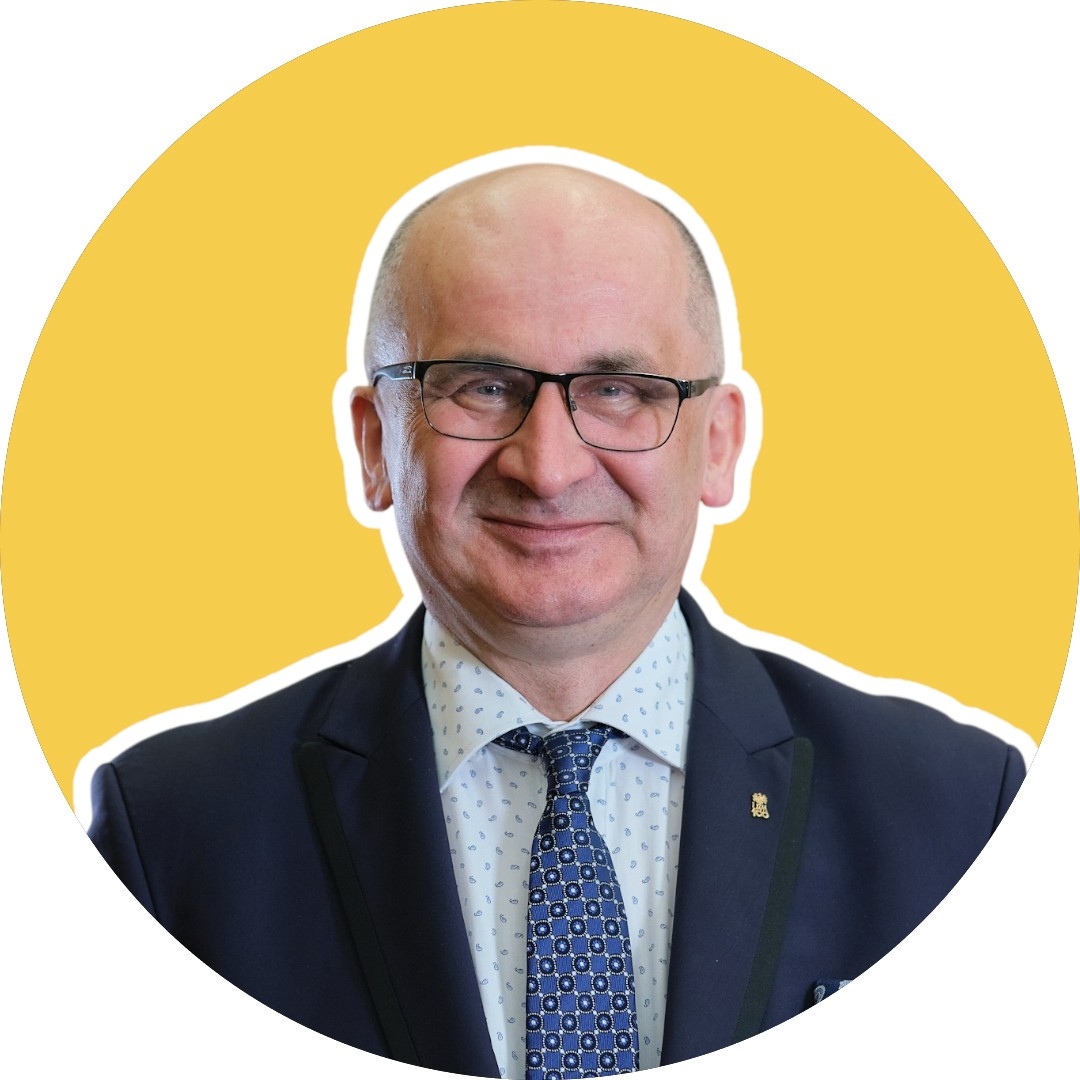
Prorektor ds. Cyfryzacji i Współpracy z Gospodarką, Szkoła Nauk Ścisłych Uniwersytet im. Adama Mickiewicza w Poznaniu tel. +48 61 829 40 58 mbanasz@amu.edu.pl